Gig Work in the UK (2026): Trading Allowance, Tax and HMRC
If you deliver food, drive, walk dogs, tutor or pick up freelance tasks through an app in the UK, the tax rules are simpler than they look. For the 2026/27 tax year, gross trading income of £1,000 or less is usually covered by the trading allowance and you don’t need to tell HMRC. Above that, you register for Self Assessment, report your profit and pay Income Tax and Class 4 National Insurance on it. From 6 April 2027 the allowance is set to rise to £3,000. This guide covers who counts as self-employed, what you’ll pay, what the platforms tell HMRC and the deadlines that matter.
Are UK gig workers self-employed?
Most delivery riders, couriers and app-based freelancers in the UK are engaged as self-employed contractors. That label matters for tax, but employment law looks at how the work actually happens, not just what the contract says.
UK employment law has three categories: employee, worker and self-employed. Tax law only has two: employed and self-employed. Two Supreme Court cases show how this plays out in the gig economy:
- Uber (2021): the court ruled that the Uber drivers in the case were “workers”, which gave them rights such as the National Minimum Wage and paid holiday. Uber set the fares and the contract terms, and that weighed heavily.
- Deliveroo (2023): the court found that the Deliveroo riders in that case were not workers for collective bargaining purposes. Their genuine right to send a substitute, turn down jobs and work for competitors was decisive.
For tax, if a platform pays you as a contractor and does not run payroll for you, you are treated as self-employed and you are responsible for reporting the income yourself. If you want to know how the EU is approaching the same questions, see our overview of the EU Platform Work Directive. The UK is not bound by it, but the comparison is useful.
The trading allowance: £1,000 now, £3,000 from April 2027
The trading allowance is a tax exemption of up to £1,000 a year for individuals with income from self-employment or casual services such as babysitting or gardening. It is based on gross income, meaning everything you earned before expenses, added up across all your trades.
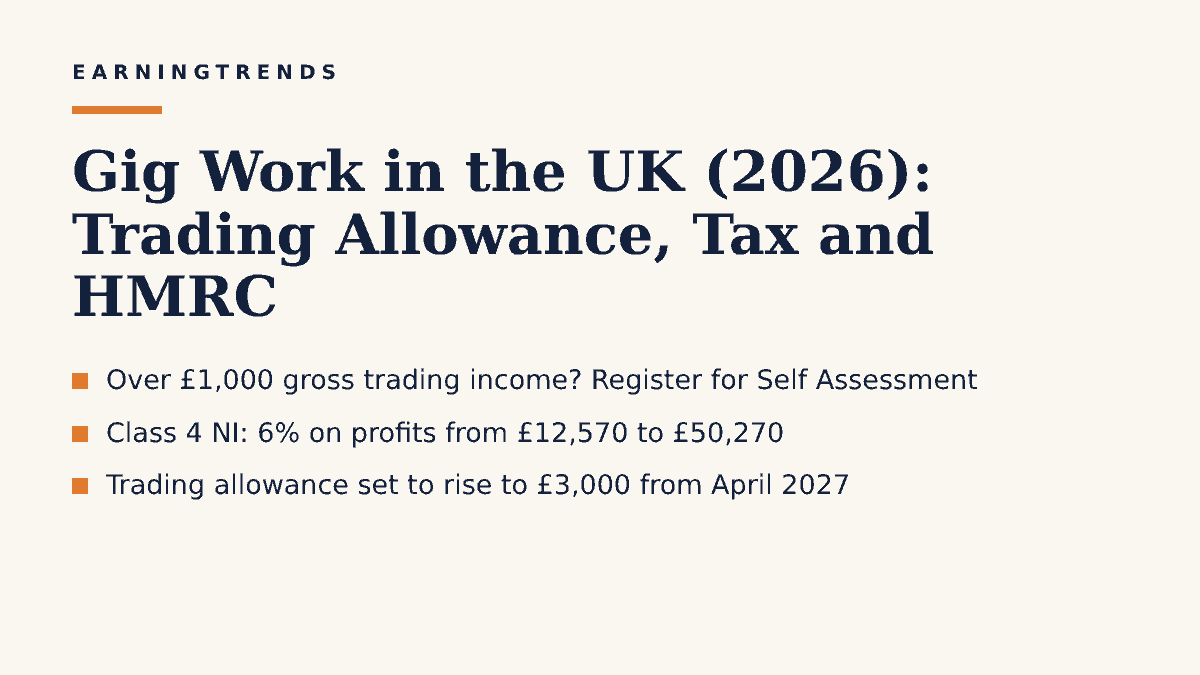
- £1,000 or less in gross trading income: usually no tax to pay and no need to register, unless HMRC asks you to file a return for another reason.
- Over £1,000: register for Self Assessment. You can then either deduct the £1,000 allowance or deduct your actual allowable expenses, but not both.
- From 6 April 2027: the Autumn Budget 2026 announced that the allowance and the Self Assessment reporting threshold for trading income will both rise to £3,000. The change still has to pass into law, so the £1,000 limit applies to the whole of 2026/27.
Example: you earned £800 from delivery shifts and £500 from freelance design work in one tax year. That is £1,300 of gross trading income, so you need to register, even though each activity on its own is under £1,000.
One catch: the Low Incomes Tax Reform Group points out that the Department for Work and Pensions does not recognise the trading allowance. If you claim Universal Credit, you still report your self-employed earnings for that purpose.
Allowance or actual expenses?
Gig work often has real costs: vehicle running costs, phone data, insulated bags, equipment, platform fees. If your allowable expenses are more than £1,000, claiming them will usually give a lower taxable profit than the allowance. If your costs are low, as is common with online tutoring or freelance writing, the flat allowance is simpler and often better. Keep receipts either way so you can compare.
What tax and National Insurance you pay
Your self-employed profit is added to any salary or other income. Income Tax applies above your Personal Allowance (normally £12,570). In England, Wales and Northern Ireland, the basic rate is 20% and the higher rate is 40%. Scotland sets its own Income Tax bands and rates, so your rate there will differ. If a day job already uses up your Personal Allowance, all of your gig profit is taxed at your main rate.
National Insurance for the self-employed is the same across the whole UK. These are the 2026/27 rates published by HMRC:
| Annual profit (2026/27) | Class 4 NI | Class 2 NI |
|---|---|---|
| Below £7,105 | Nothing | Nothing to pay; voluntary at £3.65 a week to protect your State Pension record |
| £7,105 to £12,570 | Nothing | Not charged, but you get National Insurance credits |
| £12,570 to £50,270 | 6% on profits in this band | Not charged |
| Above £50,270 | 2% on profits above this | Not charged |
Class 4 NI is calculated and collected through your Self Assessment return, together with Income Tax. If you also have a job, your employer deducts Class 1 NI from your wages as normal, and Class 4 may apply on top for your self-employed profit.
What platforms report to HMRC
Since 1 January 2024, UK digital platforms have to collect seller details and report earnings to HMRC under the OECD model rules. This covers marketplaces as well as service platforms such as food delivery, ride-hailing, freelance work and rental accommodation. Platforms send the reports each January for the previous calendar year and must give you a copy.
- For selling goods, platforms do not have to report sellers who made fewer than 30 sales and received less than €2,000 (about £1,700) in the year.
- For services such as delivery, driving, tutoring or pet care booked through an app, that de minimis exemption does not apply. Expect your earnings to be reported.
HMRC has been clear that these rules are not a new tax. The tax rules haven’t changed; HMRC can just see more of the data. The practical consequence is that unreported gig income is far easier for HMRC to spot than it used to be.
How to get set up: step by step
- Add up your gross income from all trading activities for the tax year (6 April to 5 April).
- Register for Self Assessment on GOV.UK as a sole trader if you go over £1,000. Registration is free. You’ll get a 10-digit Unique Taxpayer Reference (UTR) by post.
- Meet the registration deadline: 5 October after the end of the tax year you started. For income in 2025/26, that was 5 October 2026.
- Keep records from day one: platform statements, invoices, receipts and mileage logs.
- File your return online by 31 January and pay any tax due by the same date. Your 2025/26 return is due by 31 January 2027.
- Plan for payments on account. If your Self Assessment bill is more than £1,000, HMRC usually asks for two advance payments towards next year’s tax, due 31 January and 31 July, each worth half of your latest bill.
Making Tax Digital: does it apply to you?
Making Tax Digital (MTD) for Income Tax started on 6 April 2026. It requires digital records, compatible software and quarterly updates to HMRC, and it phases in by “qualifying income” (gross self-employment plus UK property income):
| Qualifying income | Based on tax year | MTD required from |
|---|---|---|
| Over £50,000 | 2024/25 | 6 April 2026 |
| Over £30,000 | 2025/26 | 6 April 2027 |
| Over £20,000 | 2026/27 | 6 April 2028 |
Most part-time gig workers fall below these thresholds, but full-time couriers and drivers can easily reach £30,000 of gross income, which is turnover before fuel and other costs. If that’s you, choose software now rather than in a rush next spring.
Common mistakes
- Using profit instead of gross income to check the £1,000 threshold. The test is income before expenses.
- Looking at each app separately. Income from different platforms and side gigs counts together.
- Claiming the allowance and expenses at the same time. It’s one or the other.
- Assuming the £3,000 allowance already applies. It is planned from 6 April 2027 and does not cover 2026/27.
- Missing the 31 January deadline. A late online return gets an automatic £100 penalty, even if you owe no tax, and further penalties follow if it stays late.
- Not budgeting for payments on account. Your first January bill can include a whole year’s tax plus half of next year’s in advance.
- Letting a friend or relative run your account. Platforms report earnings in the account holder’s name, so HMRC will treat the income as theirs.
Still choosing what kind of work to do? Our guides to gig economy jobs you can start without experience and freelance platforms for beginners and their fees are good starting points.
FAQ
Do I pay tax on £900 of delivery income?
Usually not. If your total gross trading income for 2026/27 is £1,000 or less, the trading allowance generally covers it and you don’t need to register. The exception is if HMRC has asked you to file a return for another reason.
I have a full-time job. Does side gig income still count?
Yes. You can be employed and self-employed at the same time. Your employer handles tax on your salary through PAYE, and you report the gig income through Self Assessment once it goes over £1,000.
Will the platform tell HMRC what I earn?
For services such as delivery, driving or tutoring booked through an app, generally yes. For selling goods, the platform reports you once you reach 30 sales or about £1,700 (€2,000) in a calendar year.
What if I’m late registering?
Register as soon as you can and file the return. Penalties depend on how late you are and how much tax is unpaid, so acting quickly keeps them down.
Conclusion
For UK gig workers in 2026/27, the key number is £1,000 of gross trading income. Below it, you can usually leave HMRC out of it. Above it, register by 5 October, keep records, choose between the allowance and your actual expenses, and file by 31 January. Platform reporting means HMRC increasingly sees what you earn, so being organised costs less than catching up later. Tax depends on your whole situation, and Scotland has its own Income Tax rates, so check with a qualified UK accountant or tax adviser if you’re unsure. This article is general information, not tax advice.
Sources
- GOV.UK: Tax-free allowances on property and trading income
- GOV.UK: Rates and allowances, National Insurance contributions
- GOV.UK: Selling goods or services on a digital platform
- GOV.UK: Making Tax Digital for Income Tax
- LITRG: Budget 2026 summary (trading allowance to £3,000)
- LITRG: Employment status and rights