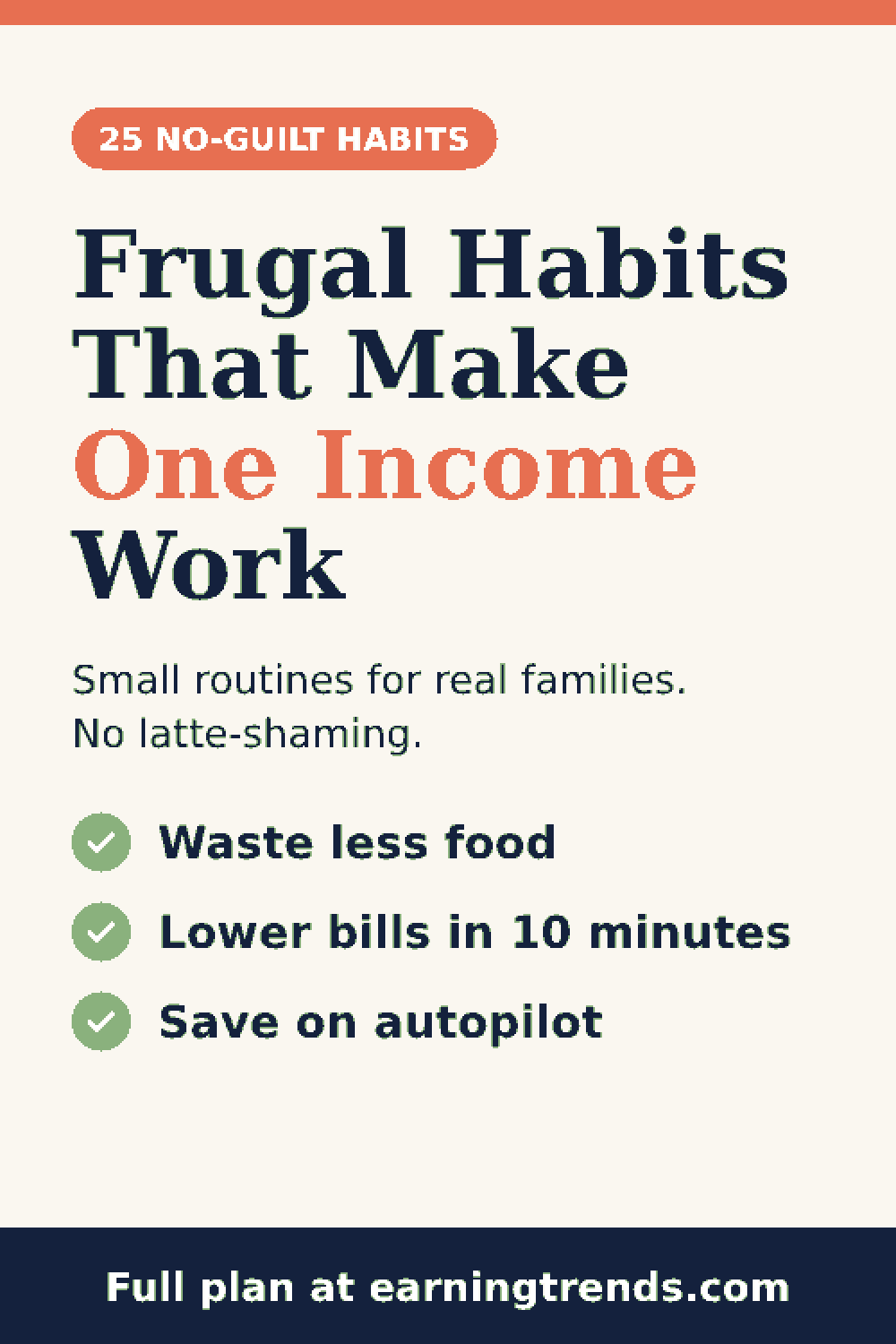
25 Frugal Habits That Make One Income Work (No Guilt)
Living on one income can feel like you are always one surprise bill away from stress, and most frugal advice either shames you for small treats or asks you to give up everything. This list is different: 25 small, repeatable habits that cut real dollars without cutting the joy out of family life. Each one comes with a number or a simple how-to, so you can pick five and start this week.
How to use this list
Don’t try all 25 at once. Habits stick when they are tiny and tied to something you already do. Read the list, mark the five that fit your family, and add one new habit every two weeks. In about ten weeks, those five will run on autopilot.
Kitchen and grocery habits (1–7)
Food is one of the biggest flexible lines in a one-income budget, so this is where small habits pay fastest. The EPA estimates that a household of four loses about $2,913 a year to food that goes uneaten, or roughly $56 a week.
- Shop from a written list built from your fridge. Before you write the list, spend 3 minutes checking what is already open or about to go off. Plan meals around those items first.
- Hold a weekly “use-it-up” dinner. One night a week, dinner is leftovers, odds and ends, or a “clean-out” soup, omelet or quesadilla. This one habit attacks that $56 a week directly.
- Freeze before it spoils. Bread, overripe bananas, cooked rice, shredded cheese and half a can of tomato paste all freeze well. Label with a marker so nothing becomes a mystery bag.
- Compare unit prices, not package prices. The small print on the shelf tag shows price per ounce or per count. The bigger box is usually cheaper per unit, but not always, so check.
- Try the store brand first. For staples like flour, oats, canned tomatoes, rice and cereal, buy the store brand once. Switch back only if your family truly notices.
- Plan two “anchor” dinners under $10. Beans and rice, egg fried rice, or pasta with a simple sauce. Our cheap dinners picky kids actually eat has ready ideas.
- Pack snacks and water before every outing. Two granola bars and refillable bottles cost cents; a drive-through stop for a hungry family can easily cost $15–25.
Home and utility habits (8–13)
- Turn the thermostat back at night. The U.S. Department of Energy says you can save as much as 10% a year on heating and cooling by turning your thermostat back 7–10°F for 8 hours a day from its normal setting. Sleep hours are the easiest 8 hours to use. (DOE notes programmable setbacks are generally not recommended for heat pumps, so check your system.)
- Wash clothes in cold water. ENERGY STAR says water heating uses about 90% of the energy it takes to run a clothes washer. Unless you are fighting oily stains, cold water generally cleans well.
- Run only full loads. ENERGY STAR notes washers use about the same energy whatever the load size, so two half loads cost you twice. The same logic applies to the dishwasher.
- Check your water heater setting. Many heaters ship at 140°F, but ENERGY STAR recommends lowering it to 120°F to cut standby heat loss and the scalding risk for little hands. If anyone at home has a weakened immune system or chronic respiratory disease, ask a professional before lowering it.
- Hang-dry one or two loads a week. Kids’ T-shirts and leggings dry fine on a rack overnight and last longer without the dryer heat.
- Do a 15-minute subscription sweep every quarter. Open last month’s bank statement, highlight every recurring charge, and cancel anything nobody used in the last 30 days.
Money system habits (14–19)
These habits don’t cut spending directly. They make the rest of your plan work without willpower.
- Give every dollar a job before the month starts. Write down income, then assign it to bills, groceries, savings and fun until nothing is left unassigned. Our month-by-month one-income budget plan walks you through it.
- Pay yourself first, even $10. Set an automatic transfer to a separate savings account for payday. Small and automatic beats big and forgotten. See how to build a $1,000 emergency fund on one income.
- Use sinking funds for predictable “surprises.” Car registration, birthdays and Christmas are not emergencies; they are bills with a date. Here are 12 sinking fund categories to start with.
- Use a 48-hour rule for non-essentials over $30. Put it in the cart, close the app, and decide in two days. You will still buy what you really need.
- Keep a “want list” note on your phone. Writing something down scratches the itch. Review the list monthly and buy the one thing still on it if the budget allows.
- Hold a weekly 10-minute money check. Same day, same time: check balances, upcoming bills and what’s left in the grocery line. It prevents end-of-month surprises.
Kids, health and family habits (20–25)
- Go to the library first. Before buying a book, movie or audiobook, check your library and its app. Many libraries also run free story times and kids’ events.
- Sell or swap outgrown clothes every season. Bag up what no longer fits at each season change and list it right away while it’s in demand. Here’s where to sell kids’ clothes and toys for the most money.
- Buy next size up on end-of-season clearance, for basics only. Plain leggings, pajamas and a winter coat you know they will need. Skip trendy items they may not like next year.
- Put two free activities on the calendar each month. A park picnic, a nature walk, a library event or a free museum day. Planning them ahead stops the “we’re bored, let’s go buy something” trip.
- Agree on gift rules with family. A spending cap or a name draw for cousins can cut holiday and birthday costs without anyone feeling left out. Suggest it early in the year, not in December.
- Ask the pharmacist about generics. The FDA says generic drugs are typically sold at an estimated 80–85% less than brand names, with the same active ingredient. Ask your doctor to allow substitution when it’s appropriate.
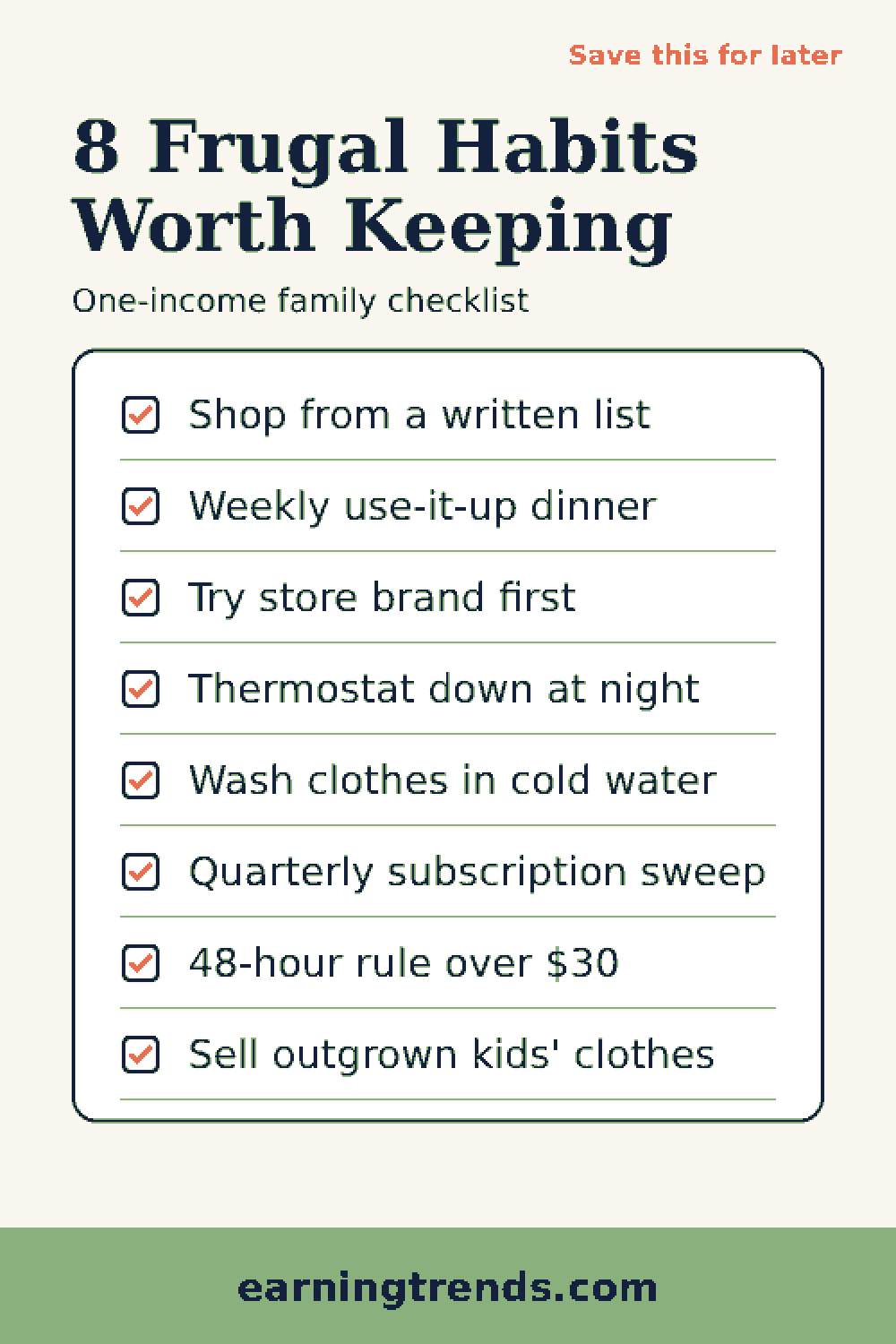
Save this checklist to your Pinterest board for later.
Bonus editorial: What most frugal habit lists get wrong
Most lists promise you will “save thousands” by adding up every tip at its best-case number. That double-counts (meal planning and less food waste are often the same dollars) and assumes you do everything perfectly. Real life with kids doesn’t work that way.
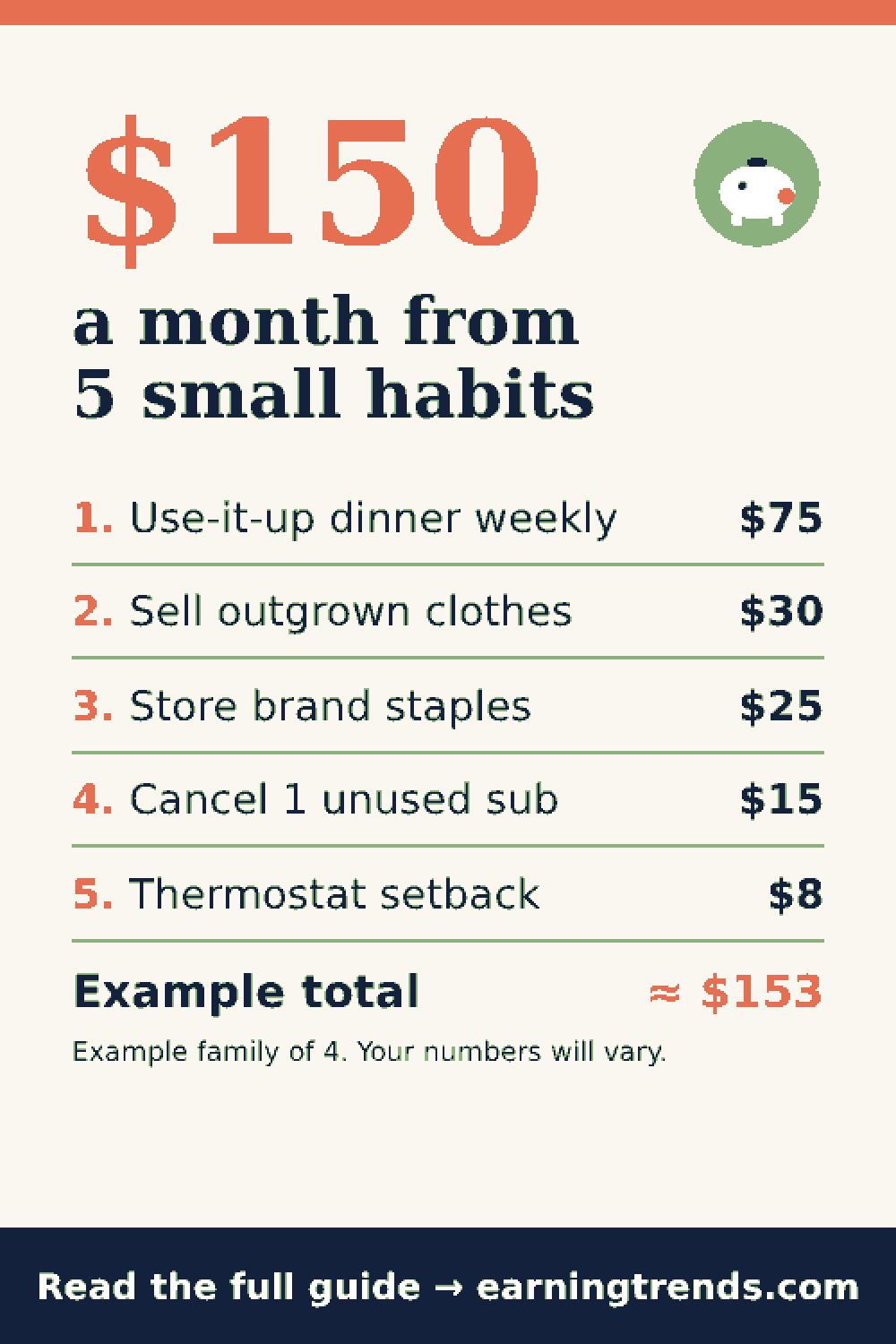
Here is a more honest worked example for a family of four that picks just five habits and does them “most of the time.” These are example numbers; your own will depend on your bills and prices.
| Habit | Assumption | Monthly savings |
|---|---|---|
| Weekly use-it-up dinner | Cut the EPA’s $56/week food-waste estimate by about 30% (~$17/week) | ~$75 |
| Sell outgrown clothes and toys | About $360 a year, spread out; depends on brands and condition | ~$30 |
| Store brand staples | 10 staples bought twice a month, ~$1.25 cheaper each | ~$25 |
| Cancel one unused subscription | One streaming or app plan nobody uses | ~$15 |
| Thermostat setback | 10% off ~$900 a year of heating and cooling | ~$8 |
| Total | Five habits, done most of the time | ~$153 |
About $150 a month, or roughly $1,800 a year, is not life-changing on its own. But on one income, $150 a month could cover your sinking funds for car registration and birthday gifts, or fill a starter emergency fund in under seven months. The point is not perfection; it’s picking habits big enough to matter and easy enough to keep.
Notice what’s not on the list: your morning coffee. Small treats that make a hard day easier are part of a sustainable budget, not a failure of it.
FAQ
How much can frugal habits really save a one-income family?
It depends on your starting point, but a realistic target for five well-chosen habits is around $100–$200 a month. Food waste and unused subscriptions are usually the biggest wins; energy habits add smaller, steady savings.
Which frugal habit should I start with?
Start with the weekly use-it-up dinner. It takes no extra money, it targets one of your biggest flexible expenses (food), and you’ll see results in your grocery total within two weeks.
How do I get my partner and kids on board?
Share the goal, not just the rules: “If we save $150 a month, that pays for a family day out every month.” Let kids help with easy jobs like checking the fridge before shopping or bagging outgrown clothes to sell.
Start today
Open your fridge right now and write down three things that need to be eaten this week. Plan tonight’s or tomorrow’s dinner around them. That’s habit #2, done, and the first few dollars back in your budget.